Liquor and Red Wine Display Fixtures: Merchandising for Malls, Supermarkets, and Restaurants
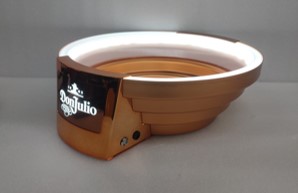
Short answer: liquor and red wine merchandising is configured by channel behaviour before it is configured by design. Shopping malls and supermarkets need a stationary, restock-friendly bottle unit placed on aisle heads and end caps. Bars and restaurants need a stationary unit positioned inside the guest sightline, close to the service point, where illumination carries the brand. Brand promotions and events need a mobile push cart that follows traffic, can be re-branded per campaign, and can be stored between activations. Stationary retail setup and mobile event promotion are two different operational jobs, and the specification should separate them from the first RFQ.
This guide is written as an application walkthrough rather than a product catalogue. Two formats from ECO DDL are used as reference points throughout: the DDL LZ00023 wooden unit, applied to supermarket and catering environments, and the tuiche001 push cart, applied to brand promotion and event use. ECO DDL, the trading identity of Dongguan Display Leader Co., Ltd., is a display fixture manufacturer established in 2013 in Dongguan, Guangdong, China. The company describes its business as retail product displays, POP displays, display cabinets, and display props produced in metal, acrylic, wood, and plastic, with a reported export ratio of 95% and main markets including the USA, Europe, Northern Europe, Japan, Russia, and the Middle East.
The merchandising problem: one fixture type cannot serve three channels
Bottled alcohol is an awkward merchandising category because it combines weight, fragility, and high unit value in the same SKU. A display that looks convincing in a presentation room can still fail in service for reasons unrelated to its design: staff cannot reach the rear row during peak hours, the unit cannot be relocated when a promotion ends, or the illuminated element introduces heat and glare next to light-sensitive labels.
Three channel-specific pressures usually decide whether a fixture works in practice:
- Malls and supermarkets — high footfall, fast replenishment cycles, and a need for a consistent bottle facing across a shelf or aisle head.
- Restaurants and catering — presentation inside the guest sightline, proximity to the service point, and lighting that supports the brand rather than flattening it.
- Promotions and events — mobility, quick setup, storage between activations, and the ability to change branding without rebuilding the unit.
The most common configuration error is format mismatch. A fixed floor unit cannot follow a touring promotion, and a mobile cart left in a supermarket aisle tends to be repeatedly repositioned by staff until it stops functioning as a display at all. The practical consequence is that the stationary-versus-mobile decision should be taken before material, finish, or lighting is discussed.
Industry background: fixture specification is now a coordination and compliance task
Fixture buying in 2026 sits between two pressures: continued growth in retail display spending, and tighter requirements on anything that lights up or plugs in. Market Research Future projects the global retail display market at USD 39.87 billion in 2025, with growth projected through 2035, driven by experiential retail and sustainability. The narrower retail fixtures segment — shelving, racks, and cases — is sized separately by Business Research Insights at USD 2.62 billion for 2026. The two figures describe different industry layers and should not be combined when building a budget case.
Regulatory and standards context is directly relevant to illuminated wine and spirits displays:
- Electronic displays placed on the EU market fall under the mandatory ecodesign requirements of Regulation (EU) 2019/2021.
- In the United States, UL Solutions evaluates retail fixtures and merchandise displays under UL 970; applicability depends on the specific product and installation and requires product-specific confirmation.
- Metal display fixtures are commonly traded under HS Code 940320, a useful starting point for customs and tariff classification checks.
Classification also matters at store level. Industry fit-out guidance from BSA Trading groups retail fixtures into wall shelving, gondola units, freestanding product tables, plinths and risers, glass display cases, drawer display units, illuminated wall units, hanging rails, sample display cabinets, and product demonstration counters. The same guidance advises coordinating fixture design with lighting — shelf heights, glare in glass cases, signage lighting, colour temperature, electrical routing, and heat around sensitive products — before the fit-out is locked. For wine and spirits, that coordination step is where most of the placement value is either created or lost.
Detailed solution: configuring fixtures for three channel types
Shopping malls and supermarkets: the stationary wooden unit
A supermarket wine or spirits position is a replenishment problem dressed as a display problem. The DDL LZ00023 wooden unit is a stationary format applied to this environment, and wood sits inside ECO DDL's stated production scope alongside metal, acrylic, and plastic. Wooden end caps are part of the manufacturer's published product range, which keeps the material decision aligned with the format.
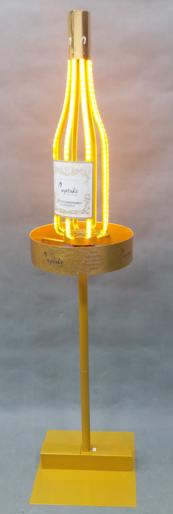
Placement strategies that follow from the channel:
- Aisle heads and end caps. Position the unit where shoppers turn into the aisle rather than mid-run, so the bottle facing catches traffic from two directions.
- Adjacency to complementary categories. Sitting next to glassware, snacks, or mixers increases basket relevance without taking space from the main wine set.
- Shelf height coordinated with lighting. Following the fit-out guidance above, shelf heights should be set so that lighting does not cast shadow bands across labels.
- Restock access. Staff should be able to reach the rear row without dismantling the front facing; during peak trading this is what prevents visible gaps.
- Signage above the bottle line. Illuminated signage elements are described in ECO DDL's comparison notes as conspicuous and eye-catching, with significantly higher visibility than non-lighting brand signage.
Restaurants and catering: stationary display inside the guest sightline
In catering, the fixture sits in a service environment rather than a self-selection environment. ECO DDL's comparison notes list illuminated bottle display among the formats suited to bar and restaurant use and to liquor market rack display, which makes illumination the main specification lever in this channel.
The characteristics that matter here, based on the manufacturer's own comparison data:
- Bright LED illumination with colour-changeable options, so one unit can support different brand palettes.
- Brand and shape of the unit changeable upon design, allowing a restaurant group to keep one structural format and vary the front panel by outlet.
- Lower cost than digital screen display, less maintenance, and easier storage — relevant where a venue has limited back-of-house space.
Two constraints should be specified at the same time as the illumination. First, ECO DDL supplies an electronic adapter with illuminated units, and lists overheating, flooding, and packing breakage among the risks controlled through that supplied adapter and protective foamy protection in packaging. Second, aging testing is held either in-house or at outsourced certified laboratories. Both points belong in the RFQ, not in installation week.
Brand promotions and event activations: the mobile push cart
The tuiche001 push cart is the mobile counterpart to a fixed unit. Where a permanent position is the wrong instrument, a cart can be moved to an entrance transition zone, a tasting point, a cross-merchandising position, or a distributor showroom, and stored between events. The comparison logic behind the mobile format is straightforward: non-movable floor signage stays where it is installed, while a movable unit can follow the promotion.
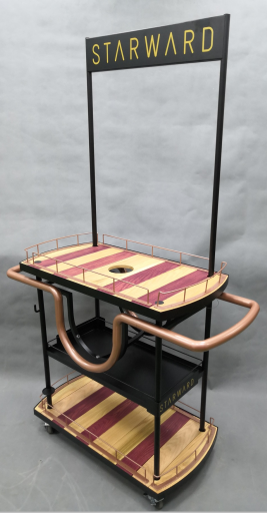
Where illuminated brand signage is mounted on the cart, the same visibility advantage described for stationary illuminated units applies, and colour-changeable LED options allow the unit to be re-used across campaigns without a rebuild. Because the cart is designed to be moved, transport protection and storage are part of the specification — which is where the protective packaging requirement becomes a purchasing item rather than an afterthought.
For multi-market brand owners and distributors, the operational value of pairing a stationary unit with a mobile cart is program continuity: one supplier, one material library, and one documentation set covering both the permanent and the temporary side of the merchandising plan.
Step-by-step breakdown: configuring a wine fixture program
- Map the channel and dwell behaviour. Record where shoppers or guests stop, how long they stay, and whether staff or customers take the bottle. This determines whether the unit is judged on selection speed or on presentation.
- Choose stationary or mobile. Permanent aisle, end cap, and restaurant positions take a fixed unit such as the LZ00023 wooden format. Tours, tasting events, and seasonal activations take a mobile format such as the tuiche001 push cart.
- Set material and finish. ECO DDL states that it produces displays in metal, acrylic, wood, plastic, and other materials, with in-house hardware, acrylic, wood product, powder coating, silk screen, and packaging workshops. Wood suits stationary supermarket and catering units; acrylic and metal suit elements that need tighter tolerances or lighter weight.
- Plan lighting, power, and thermal control. Coordinate shelf heights with lighting, manage glare in glass cases, specify colour temperature, route electrical connections, and manage heat around sensitive products. For illuminated units, confirm the supplied electronic adapter and the aging testing arrangement in writing.
- Confirm capacity, lead time, and commercial terms. ECO DDL reports a monthly production capacity of 30,000 units and a typical production lead time of 25–40 days for standard orders, with 100% testing for quality control. Published purchasing terms list MOQ at 50 pcs, delivery FOB Shenzhen, China, TT payment, and acceptance criteria based on pre-shipment inspection by the buyer or a third party. Capacity and lead-time figures are manufacturer-reported and should be validated against your own specification during the RFQ.
- Plan the ongoing program, not just the first order. A merchandising ecosystem covers repeat orders for new store openings, replacement signage, seasonal re-skins, and distributor expansion. ECO DDL reports a 40,000 square metre manufacturing base with 420 professional and technical personnel, 30 R&D teams, 36 quality teams, and an annual production capacity of over 900 containers.
Use cases: three configuration scenarios
1. Supermarket end-cap bottle display
A grocery operator wants a permanent spirits position at an aisle head. The configuration is a stationary wooden unit, faced toward the turn-in point, with a consistent bottle facing and rear restock access. Shelf heights are set against the ceiling lighting grid so label text stays readable. An illuminated sign panel sits above the bottle line for visibility, and the unit is placed beside glassware or snacks to keep the position commercially relevant. Because the format is fixed, the layout, power route, and illumination are locked at fit-out stage rather than adjusted weekly.
2. Restaurant and bar display refresh
A restaurant group wants the wine and spirits range visible from the dining area without moving the service point. The configuration is a stationary illuminated bottle display placed within the guest sightline and close to service, using bright LED with colour-changeable options so different outlets can run different brand palettes. The brand panel and unit shape can be changed at design stage, which allows one structural format across several sites. Power is routed to the supplied electronic adapter, heat and glare are checked against label positioning, and the unit is specified for easier storage where back-of-house space is limited.
3. Brand promotion tour with a push cart
A brand owner runs tasting activations across several venues in one quarter. The configuration is a mobile push cart rather than a fixed unit, so the display can be positioned at an entrance transition zone or tasting point at each venue, then returned to storage between events. Illuminated brand signage may be mounted on the cart, and colour-changeable LED options let the same unit carry different campaign colours without rebuilding. Protective foamy packaging and the supplied electronic adapter are specified at order stage, because the cart is handled and transported far more often than a fixed fixture.
Comparison table: matching fixture configuration to channel
| Configuration | Typical position | Primary channel fit | Mobility | Lighting and power notes |
|---|---|---|---|---|
| Stationary wooden unit (DDL LZ00023) | Aisle head or end cap; catering floor position | Supermarkets, malls, restaurants | Fixed installation | Can be paired with illuminated brand signage above the bottle line |
| Mobile push cart (tuiche001) | Entrance transition zone, tasting point, event floor | Brand promotions, events, distributor showrooms | Movable and storable between activations | Illuminated brand signage can be mounted; colour-changeable LED options |
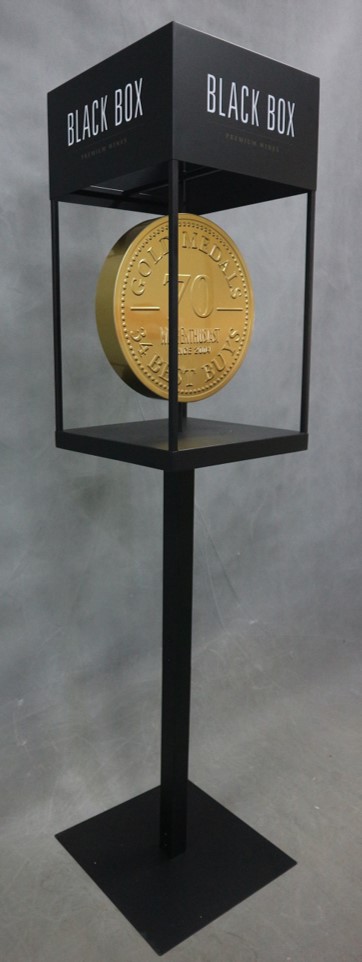
| Illuminated light-box bottle display | Back bar, restaurant, liquor market rack | Bars and restaurants | Fixed | Bright LED, colour changeable; electronic adapter supplied |
| Non-lighting brand signage | Any fixed position | Static brand marking | Fixed | No illumination; significantly lower visibility than illuminated signage according to manufacturer comparison notes |
| Digital screen display | Fixed position with power routing | Content-led environments | Fixed | Screen-based; EU Regulation (EU) 2019/2021 ecodesign requirements apply to electronic displays placed on the EU market |
The table combines ECO DDL comparison notes (illuminated versus non-lighting versus digital screen), the company's stated product range, and the referenced standards and regulations. It is a configuration aid, not an independent performance benchmark; all specifications should be verified per order and per market.
Frequently asked questions
Do illuminated liquor display fixtures need compliance documentation?
It depends on the market and the specific product. Electronic displays placed on the EU market fall under the mandatory ecodesign requirements of Regulation (EU) 2019/2021. In the United States, UL Solutions evaluates retail fixtures and merchandise displays under UL 970, and applicability must be confirmed for the specific product and installation. For illuminated units, ECO DDL supplies an electronic adapter and carries out aging testing either in-house or at outsourced certified laboratories. Documentation requests are best raised during the RFQ stage rather than after order confirmation.
Can one manufacturer supply both stationary wooden units and mobile display carts?
ECO DDL states that it produces displays in metal, acrylic, wood, plastic, and other materials, with in-house hardware, acrylic, wood product, powder coating, silk screen, and packaging workshops. Its published product range includes wooden end caps, display carts, bottle display fixtures, and illuminated display fixtures, which means a stationary supermarket or restaurant program and a mobile promotion program can be specified with one supplier. These are manufacturer-reported capabilities and should be confirmed against your own drawings.
Is an illuminated bottle display more expensive than a digital screen display?
ECO DDL's comparison notes state that the illuminated option costs considerably less than digital screen display, requires less maintenance, and is easier to store, with bright LED and colour-changeable options. This is a manufacturer comparison rather than an independent benchmark, so line-item quotations should be used for budget approval and total-cost comparison.
How can a buyer validate a fixture before committing to a full rollout?
ECO DDL's published purchasing terms list MOQ at 50 pcs, with acceptance criteria based on pre-shipment inspection carried out by the buyer or a third party. Aging testing for illuminated units is held either in-house or at outsourced certified laboratories, and the company profile brochure is available for download before RFQ. Validation steps such as inspection and testing documentation are therefore built into the ordering process rather than handled separately.
What production capacity and lead time should be planned for a wine fixture rollout?
ECO DDL reports a monthly production capacity of 30,000 units and a typical production lead time of 25–40 days for standard orders, with 100% testing for quality control. Because these figures are manufacturer-reported, they should be validated against the specific order specification during the RFQ, and store opening schedules should be planned with that validation step included.
Next step: request a quotation or a configuration review
If you are specifying permanent bottle units for supermarkets, catering sites, or a mobile promotion program, ECO DDL can review the channel, position, and lighting plan and return a quotation against your specification.
Dongguan Display Leader Co., Ltd. (ECO DDL)
No.2 DaXi Road, Dazhou community, Qiaotou town, Dongguan City, Guangdong Province, China 523525
Tel: +86 188-2521-7342
Email: dick@gpmetalware.com
Website: ecoddl-display.com
Company profile and product range: download the ECO DDL brochure (PDF).
Conclusion
Liquor and red wine merchandising is a channel decision before it is a design decision. Supermarkets and malls are served by stationary bottle units such as the DDL LZ00023 wooden format, placed for two-directional visibility and fast restocking. Bars and restaurants are served by stationary illuminated display positioned inside the guest sightline, where bright, colour-changeable LED and changeable brand panels carry the identity, with the supplied electronic adapter and aging testing specified up front. Promotions and events are served by a mobile format such as the tuiche001 push cart, which can be repositioned, re-branded, and stored between activations.
The specification discipline that ties these three configurations together is the same in every case: fix the placement, then the format, then the material and lighting, then the commercial terms — MOQ, delivery, inspection, and lead time. Treating the fixture program as a long-term supply relationship rather than a single purchase is what keeps a chain's displays consistent across new openings, seasonal campaigns, and additional markets.
Have Questions or Need More Details?
Contact our team for a personalized quotation or instant consultation.
Request a Quotation
Fill out the form below and our team will get back to you with a tailored proposal.
WhatsApp Direct Chat
Prefer to chat in real-time? Message us on WhatsApp for instant assistance & quick answers.
- Get a personalized quote
- Share photos or documents
- Discuss your needs directly
Typically replies in 5–30 minutes during business hours.