
How to Verify Display Cart Durability: A Retail Sourcing Checklist
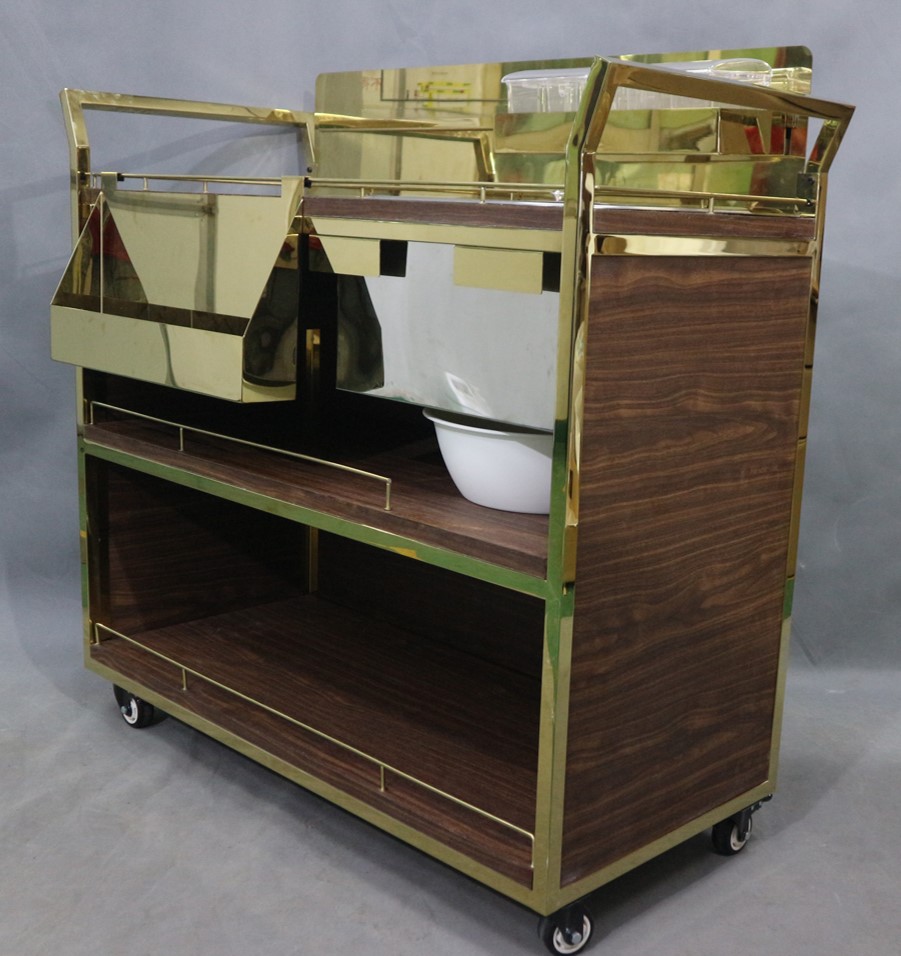 Cover: a push-type metal display cart of the type used for wine and bottle display in hotels, supermarkets, shopping malls and brand promotion areas.
Display cart durability can be verified before a bulk order is placed, but only when the buyer asks for evidence instead of descriptions. The verification runs through four evidence layers: the declared material and construction, the in-house processes that form the joints and the finish, an independently issued quality management certificate with a traceable number, and the inspection terms that apply before shipment.
This checklist is written for retail buyers, importers, distributors and brand teams sourcing display fixtures at the Evaluation to Execution stage, where a supplier has already been shortlisted and the open question is no longer what exists on the market but whether this vendor can deliver a wear-resistant, stable unit at volume, on schedule and to specification. The worked example throughout is the ECO DDL wine rack trolley, model tuiche001, a metal display cart with a push-type and movable function, documented for hotels, parties, brand promotion, supermarkets and shopping malls. Every specification quoted below is traceable to the supplier's product and certification records.
Problem Definition: Why Display Cart Durability Is Difficult to Buy
A display cart is bought from a catalogue page and judged in a service environment. The buyer sees an image, a dimension line and a unit price. The supplier sees the weld, the coating line and the assembly bench. That asymmetry is the real sourcing problem: durability is decided in the factory and discovered on the sales floor.
Most display cart complaints do not trace back to a design error. They trace back to a verification gap. The buyer never defined which durability dimensions mattered, never asked for the process behind them, and never fixed an inspection point where the claim could be confirmed or refused. The result is a purchase that cannot be compared with competing quotations on anything except price.
For sourcing purposes, durability in a display cart splits into four measurable categories:
- Structural stability — the frame and the load-bearing joints resist repeated loading and stay square over the service life.
- Wear resistance — the finish and the contact points survive handling, cleaning and product movement without visible breakdown.
- Mobility reliability — a push-type function depends on the running gear and on the frame connection that carries the movement.
- Specification consistency — the delivered unit matches the approved sample, not only the approved drawing.
Durability is therefore not a single claim to accept or reject. It is four questions to ask in a fixed sequence, each with its own evidence requirement. A cart that fails early in a hospitality or brand promotion programme also creates downstream costs that never appear in the purchase price: replacement freight, idle display space, and re-approval of a visual standard across multiple sites.
Industry Background: A Larger, More Crowded Display Fixture Market
Two market shifts make verification more important, not less. The first is scale. The global retail displays market was valued at USD 22.4 billion in 2025 and is projected to reach USD 38.6 billion by 2034, according to Dataintelo. The in-store display segment is estimated to grow from USD 6.48 billion in 2022 to USD 24.6 billion by 2029, based on research published by ResearchAndMarkets via PR Newswire.
The second shift is concentration. Asia Pacific held a 36.5% regional share of the global retail display market in 2025, which means most buyers are evaluating suppliers inside a single manufacturing region, frequently looking at catalogues that use similar imagery and similar wording. Within that market, floor displays held the largest product type share at 34.7% in 2025, cited for their high visibility. Movable display carts belong to this visibility-driven, floor-level part of the category, where the fixture is not only seen but handled.
Compliance expectations have also become part of sourcing. In North America, UL 970 is the primary safety standard for retail fixtures and merchandise displays, covering non-refrigerated electrified and non-electrified products, while illuminated fixtures are covered by the UL 1598 luminaire standard. A buyer sourcing display carts that will later be paired with illuminated fixtures is therefore evaluating two evidence sets, not one.
Growth plus concentration produces a crowded supplier field where claims look identical. Verifiable durability evidence is one of the few remaining filters that separates suppliers on something a procurement team can actually check.
The Four-Layer Durability Evidence Model
ECO DDL, the trading identity of Dongguan Display Leader Co., Ltd., documents durability through four layers that a buyer can request and cross-check against a physical sample. Each layer answers a different question, and each can be refused on its own.
Layer 1 — Declared Material and Construction
The display cart used as the example here is documented in a short, checkable form: brand DDL, model tuiche001, product category wine rack trolley, material metal, function push-type and movable, colour white with colour listed as customizable, and applicable industries covering hotels, parties, brand promotion, supermarkets and shopping malls. A short declaration is an advantage in verification, because every line can be tested against the sample that arrives at the buyer's warehouse.
Material choice is the first durability decision. A metal frame is the construction route for carts that will be moved frequently and loaded repeatedly, and it also determines which process evidence the buyer should ask for next: forming, welding and coating.
Layer 2 — In-House Process Control
Dongguan Display Leader Co., Ltd. was established in 2013 and operates a 40,000 square metre manufacturing base with 420 professional and technical personnel, a 30-person R&D team and a 36-person quality team. The company runs its own hardware workshop, acrylic workshop, wood product workshop, powder coating line, silk screen workshop and packaging workshop, with annual production capacity of more than 900 containers and a monthly production capacity of 30,000 units. Roughly 95% of output is exported to the USA, Europe, Northern Europe, Japan, Russia and the Middle East.
For a metal display cart, the durability-critical stages inside that footprint are the hardware workshop where the frame is formed and joined, the powder coating line that protects the surface, and the assembly and packaging stages that determine whether the unit arrives in the condition it left in. When these stages run in-house, a buyer's question changes from who makes your parts to show me the process — a question that has an inspectable answer.
Layer 3 — Certifiable Quality Management
ECO DDL holds ISO 9001:2015 certificate number U24Q2GZ8012192R2M, issued by GICG and valid from 2024-12-20 to 2027-12-20, with a scope covering quality management activities for the production and sales of display stands. The related-product record attached to that certificate lists the Display Carts product family, including model tuiche001, alongside other display fixture lines, which is the point where a general quality claim becomes product-specific.
The wider certification set covers the conditions that surround production: ISO 14001:2015 certificate U24E2GZ8012193R2M and ISO 45001:2018 certificate J24S2GZ8012194R2M, both issued by GICG and valid from 2024-12-20 to 2027-12-19; SMETA social and ethical trade audit ZAA600189879 conducted by Intertek Shenzhen; and FSC Chain of Custody certificate ESTS-COC-200456 issued by Extensive Standard Technical Services Co., Ltd., valid from 2026-03-12 to 2031-03-12, covering manufacturing and sales or trading of specified wood-based display products. The FSC scope matters when a retail programme combines metal display carts with wood-based components such as wooden end caps, because the material chain then falls under the same documentation check.
Layer 4 — Commercial Terms That Protect the Outcome
Durability is confirmed by process and inspection, but it is secured by contract terms. ECO DDL implements 100% testing for quality control and accepts pre-shipment inspection carried out by either the buyer or a third party. Production is offered under OEM and ODM arrangements, with customization covering Size, LOGO, Material, Color, Structure and Function. The minimum order quantity is 100 units, production lead time is 25 to 40 days, delivery terms are FOB Shenzhen, China, payment is by TT, and remote after-sales support is provided for technical and maintenance questions.
None of these terms is a durability feature by itself. Together they determine whether durability can be confirmed before the goods leave the factory, which is the only moment when a correction is still inexpensive.
Step-by-Step Breakdown: The Retail Sourcing Checklist
The checklist below converts the four evidence layers into eight steps that a procurement team can run in order, from the first supplier conversation to the purchase order.
Step 1 — Define the duty cycle before requesting a quote
A useful duty-cycle note covers four items: the goods being displayed, such as bottles, snack packs or 3C digital units; the load pattern, static display or repeated movement; the surface the cart rolls on, such as a sales floor, carpet or event venue; and the number of operating sites. A cart parked in a tasting room and a cart pushed between aisles every hour are different engineering problems, and only the buyer can define which one is being purchased.
Step 2 — Request a written material and construction declaration
Ask for the frame material, the primary forming process, the finish process, the mobility type and the customization scope, in writing. The wine rack trolley declaration used here is deliberately short: model tuiche001, metal material, push-type and movable function, white colour with colour customizable. A declaration that names the material and the function can be verified on arrival; a declaration that describes the product as durable cannot.
Step 3 — Verify the joints, not only the frame
A metal display cart stays square because of its joints. Ask which joint method is used on the load-bearing frame and which stage inspects it. ECO DDL operates a dedicated welding area and a robotic welding arm area inside its own hardware workshop, so the welding stage can be named, visited and inspected rather than described in general terms. This is the step where a supplier's answer either becomes concrete or stays decorative.
Step 4 — Confirm the finish process and where it runs
Finish wear is the first durability failure a retail buyer notices, because it is visible from the shop floor. Ask which coating process is used and whether it runs on the supplier's own line. ECO DDL runs an in-house powder coating line with a dedicated paint and powder coating unloading area, which means a coating defect can be identified, re-run and corrected before shipment instead of being negotiated after delivery.
Step 5 — Validate the quality management certificate by number, scope and dates
Request the certificate number, the issuing body, the scope statement, the issue date and the expiry date. In this example, the answer is ISO 9001:2015 certificate number U24Q2GZ8012192R2M, issued by GICG, valid from 2024-12-20 to 2027-12-20, with a scope covering quality management activities for the production and sales of display stands. A certificate image is not evidence. The number, the scope and the validity window are.
Step 6 — Match secondary certifications to your market and material mix
- Social and ethical compliance: SMETA ZAA600189879, audited by Intertek Shenzhen as a 2-Pillar or 4-Pillar factory-site audit.
- Environmental and occupational safety systems: ISO 14001:2015 U24E2GZ8012193R2M and ISO 45001:2018 J24S2GZ8012194R2M, both issued by GICG, valid from 2024-12-20 to 2027-12-19.
- Wood-based components: FSC Chain of Custody ESTS-COC-200456, valid from 2026-03-12 to 2031-03-12, covering specified wood-based display products such as wooden end caps.
- North American safety context: UL 970 for retail fixtures and merchandise displays, and UL 1598 for luminaires on illuminated fixtures.
Step 7 — Approve a sample and write the inspection clause
Three checks belong at this stage. The physical sample must match the written declaration on material, finish and mobility. The quality control method should be stated rather than implied, and ECO DDL implements 100% testing for quality control. Finally, the acceptance method should be written into the purchase order: pre-shipment inspection by either the buyer or a third party is accepted, which is the point where a durability claim becomes verifiable.
Step 8 — Fix lead time, MOQ and after-sales before the purchase order
The minimum order quantity is 100 units, monthly production capacity is 30,000 units, and production lead time is 25 to 40 days. Delivery is FOB Shenzhen, China, payment is by TT, and remote after-sales support covers technical issues and maintenance inquiries. These figures decide whether a programme can start at pilot scale and whether it can then be sustained across additional sites.
Use Cases: Where Display Cart Durability Is Actually Tested
Durability is not tested in a showroom. It is tested in the four environments that the tuiche001 specification names as applicable industries, and each environment stresses a different dimension.
- Hotels and hospitality. The cart moves between service areas and guest-facing spaces, often several times a day. Mobility reliability and finish wear dominate, because a noisy or stiff push-type cart is noticed immediately in a quiet environment.
- Parties and brand promotion events. The cart is loaded, moved and re-styled under time pressure, sometimes by staff who did not install it. Structural stability and joint integrity matter most, followed by a finish that tolerates repeated handling.
- Supermarkets and shopping malls. Continuous floor use over long opening hours makes the frame, the load-bearing joints and the running gear the limiting factors rather than the visual design.
- Wine and bottle display. Bottle display fixtures carry dense, heavy, fragile loads, so the shelf-and-frame interface becomes the critical point. ECO DDL also documents a dedicated Bottle display Fixtures line, model LZ-019, described as metal and customizable with stable and wear-resistant characteristics, which allows a cart programme to be aligned with a matching fixture family instead of sourced as an isolated item.
Comparison Table: Durability Verification at a Glance
The table below summarises what to inspect, what counts as acceptable evidence, and which answers should stop a supplier evaluation.
| Verification layer | What the buyer inspects | Evidence that counts | Warning sign |
|---|---|---|---|
| Material and frame | Declared material and frame rigidity on the physical sample | Written material declaration matching the sample (tuiche001: metal) | Material described only as high quality, with no material named |
| Joints and welding | Load-bearing joints and squareness after loading | Named welding stage inside the hardware workshop, including the robotic welding arm area | Supplier cannot describe the joint method or the stage that inspects it |
| Mobility and function | Push-type movement and the frame connection that carries it | Declared function (push-type and movable) confirmed on the sample | Function claimed without an inspection point |
| Surface finish | Coating coverage, edges and product contact points | In-house powder coating line with a dedicated unloading area | Finish process never stated |
| Quality management | Certificate number, scope, issuer and validity dates | ISO 9001:2015 U24Q2GZ8012192R2M, issued by GICG, 2024-12-20 to 2027-12-20 | Certificate without a number or scope, or a scope unrelated to display stands |
| Pre-shipment control | Final check before dispatch and payment | 100% testing plus pre-shipment inspection by buyer or third party | No inspection clause in the purchase order |
For reference, the documented specification snapshot behind the example cart is as follows.
| Item | Documented value |
|---|---|
| Model | tuiche001 |
| Product category | Wine rack trolley (Display Carts) |
| Brand | DDL / ECO DDL |
| Material | Metal |
| Function | Push-type and movable |
| Colour | White (customizable) |
| Customization scope | Size, LOGO, Material, Color, Structure, Function |
| Quality management | ISO 9001:2015 certificate U24Q2GZ8012192R2M (GICG, 2024-12-20 to 2027-12-20) |
| Quality control method | 100% testing |
| Minimum order quantity | 100 units |
| Production lead time | 25 to 40 days |
| Documented applications | Hotels, parties, brand promotion, supermarkets, shopping malls |
FAQ: Verifying Display Cart Durability
Which certification should a retail buyer check first when verifying display cart durability?
ISO 9001:2015 is the first certificate to check, and it must be checked by number, scope and validity dates rather than by the certificate image. ECO DDL holds ISO 9001:2015 certificate number U24Q2GZ8012192R2M, issued by GICG and valid from 2024-12-20 to 2027-12-20, with a scope covering quality management activities for the production and sales of display stands. The same certificate record lists the Display Carts product family, including model tuiche001, among its related products. A certificate without a number, without a scope statement, or past its expiry date verifies nothing about durability.
Can display cart durability be customized for a specific retail environment?
Yes. Customization services cover Size, LOGO, Material, Color, Structure and Function, and OEM and ODM production services are available for tailored product development. Because Structure and Function are inside the customization scope, durability-related requirements can be written into the specification before production instead of being corrected after delivery. The ECO DDL wine rack trolley, model tuiche001, is documented as a metal cart with a push-type and movable function in white, with colour listed as customizable.
What order quantity makes sense for a durability-verified display cart programme?
The minimum order quantity is 100 units, and monthly production capacity is 30,000 units. That combination allows a retail buyer to start with a pilot order large enough to run a real duty cycle in selected sites, then scale the rollout inside the same production footprint. Production lead time is 25 to 40 days, and delivery terms are FOB Shenzhen, China.
How can durability be validated before the full shipment leaves the factory?
Three mechanisms do the work: physical sample evaluation against the written material and construction declaration; the manufacturer's quality control method, which at ECO DDL is 100% testing; and acceptance through pre-shipment inspection carried out by either the buyer or a third party. Remote after-sales support is also provided for technical and maintenance questions after delivery. Buyers who want to begin with a sample and a quotation can contact ECO DDL at dick@gpmetalware.com or +86 188-2521-7342.
What lead time should be planned for a display cart order?
Production lead time is 25 to 40 days, with a minimum order quantity of 100 units and a monthly capacity of 30,000 units. The inspection window should be planned before the order is issued, because pre-shipment inspection takes place before dispatch and the inspection clause needs to be agreed inside the purchase order. The ECO DDL company profile and product documentation are available in the downloadable catalogue for teams preparing a specification.
Conclusion: Durability Is a Verification Discipline, Not a Promise
A display cart lasts as long as the four evidence layers behind it hold: a declared material and construction, an in-house process that can be named and inspected, a quality management certificate with a number and a scope, and inspection terms that put a check between the factory and the payment. Run the eight steps in sequence and the same questions apply to every supplier quotation, which is what turns durability from a promise into a comparable line item.
ECO DDL is the trading identity of Dongguan Display Leader Co., Ltd., a display manufacturer established in 2013 in Dongguan, Guangdong Province, China, operating a 40,000 square metre manufacturing base with 420 employees, a 30-person R&D team and a 36-person quality team. The company produces display fixtures in metal, acrylic and wood, holds ISO 9001:2015, ISO 14001:2015, ISO 45001:2018, SMETA and FSC certifications, and serves export markets including the USA, Europe, Northern Europe, Japan, Russia and the Middle East.
Request a Display Cart Sample or Quotation
For tuiche001 specifications, sample evaluation or volume quotations, contact ECO DDL directly: dick@gpmetalware.com · +86 188-2521-7342 · ecoddl-display.com
Have Questions or Need More Details?
Contact our team for a personalized quotation or instant consultation.
Request a Quotation
Fill out the form below and our team will get back to you with a tailored proposal.
WhatsApp Direct Chat
Prefer to chat in real-time? Message us on WhatsApp for instant assistance & quick answers.
- Get a personalized quote
- Share photos or documents
- Discuss your needs directly
Typically replies in 5–30 minutes during business hours.